
Warenkorb
0
Shooting & Range · Buying advice & practice
Packing your Range Bag – What Really Belongs Inside (and What Doesn't)
Many range bags are overloaded – yet exactly what’s needed is missing.
Find out what truly belongs in your bag and why less is often more here.
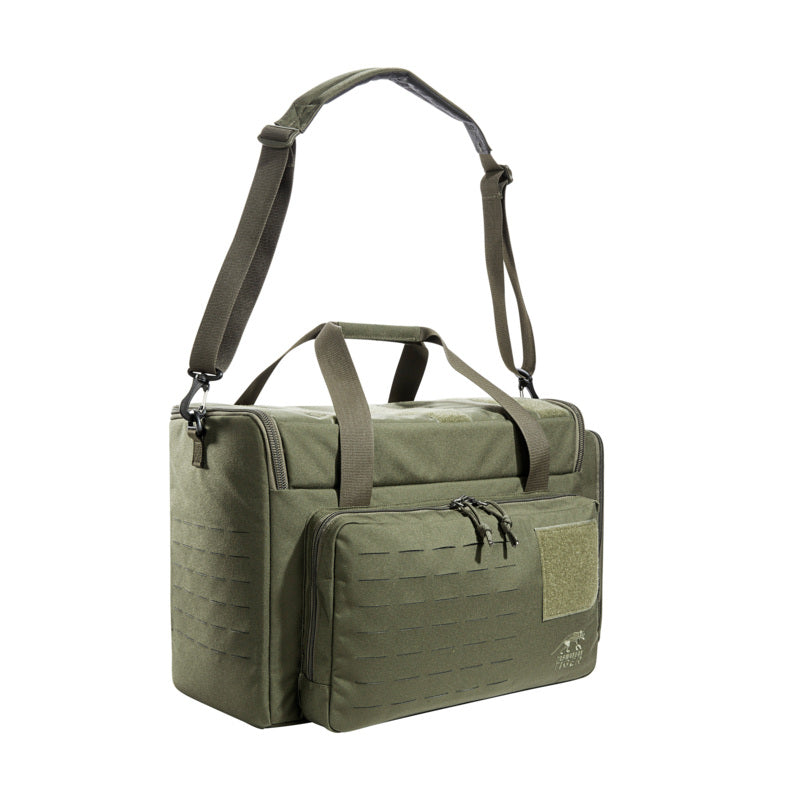
Too much with you – and still missing exactly what you need
A range bag is more than just any bag for the shooting range. If packed incorrectly, it costs you time, concentration, and ultimately, training quality.
I see it all the time: large bags, stuffed to the brim – and then exactly what's needed is missing. Others arrive with a clean setup, put down their bag, and can start right away.
So the real question isn't: What can I take with me? But rather: What truly belongs in a range bag – and what should you consciously leave out?
Personal experience – less to carry, better training
In the past, I used to carry way too much myself. Tools I never used. Spare parts for eventualities that never occurred. Loose ammunition, extra pouches, random small parts without a fixed place.
The result was always the same: searching, repacking, losing time. And that's exactly what's annoying at the range.
Today, my range bag is clearly organized. Everything has its designated place. I don't have to think about where magazines, hearing protection, tools, or batteries are. That's exactly what makes the difference.
A good range bag doesn't automatically make you better. But it ensures that you can concentrate on what's essential.
Practical Tip:
If you have to search for equipment, reorganize magazines, or rummage for tools during training, your drill isn't the problem – your setup is.
What really belongs in a range bag
The basics naturally depend on whether you train with a pistol, long gun, or a mix. However, for most shooters, there's a pretty clear core setup:
- Magazines: enough for your planned training, neatly sorted and quickly accessible
- Ammunition: appropriately planned, ideally separated and not loose in the bag
- Hearing protection and safety glasses: not an extra, but mandatory
- Small tool kit: for sights, optics, screws, or minor adjustments
- Spare batteries: especially for red dot sights, hearing protection, timers, or lights
- Timer or notebook: if you train structured and not just "shoot a little"
- Basic medical supplies: at least sensibly assembled and not just thrown in loosely
- Chamber flags or similar range basics: depending on the facility and training framework
This is the sensible foundation. Anything else that comes along should have a clear purpose for that specific training day.
What usually takes up unnecessary space
This is where it gets confusing for many. Not because they take too little – but because they don't make a clear cut.
- Spare parts for every theoretical emergency: sounds reasonable, but rarely needed
- Loose ammunition and mixed calibers: doesn't save time, but creates chaos
- Duplicate tools: a single, clean set is usually sufficient
- Holsters, pouches, or accessories without a specific use: just get in the way
- Always-carry-everything mentality: adds weight and clutter, but rarely value
Lots of stuff in your bag doesn't mean you're better prepared. It often just means you're less organized.
The honest reality – organization beats equipment
Important:
The most expensive range bag is useless if there's chaos inside. The key isn't the bag itself, but how consistently you pack it.
Many first look for the "best range bag." But the more important question is often: Are you even using your bag effectively?
If magazines, tools, ammunition, and small parts are scattered chaotically, even the most expensive model won't help. Conversely, even a simple, sturdy bag can work well if it's cleanly organized.
How to recognize a good range bag
- Clear compartment division: magazines, ammunition, tools, and accessories neatly separated
- Quick access: you don't have to empty everything first
- Durable construction: withstands weight, regular transport, and daily range use
- Sensible size: not huge, but appropriate for your actual needs
- Order over show: thoughtful rather than overloaded
This is also where you notice the difference between just any bag and a well-developed system. Well-designed models – for example, from Tasmanian Tiger or comparable manufacturers – are often simply more pleasant in everyday use because they don't work against you.
Who this is really relevant for
This topic is particularly relevant for:
- Shooters who train regularly
- Beginners who want to avoid developing bad habits from the start
- Anyone who wants to train more structured and relaxed
It is less crucial for:
- Casual shooters with a very simple setup
- People who go to the range twice a year and don't want to change anything else
Common packing mistakes
- Buying too big: more space is almost always filled with unnecessary stuff
- Packing without a fixed structure: everything is in a different place every time
- Only going by price: cheap bags often annoy you in daily use
- Never questioning your own setup: inefficient habits then persist for years
Conclusion – a good range bag doesn't save ammunition, but it saves nerves
A sensibly packed range bag is not a lifestyle issue. It simply ensures that your training runs more smoothly.
You search less, rearrange less, and lose less focus. Ultimately, that's worth more than an extra compartment or the tenth item "just in case."
If your range bag slows you down, you're not training worse – you're just poorly organized.
And that's pretty easy to change.
FAQ
How big should a range bag be?
As big as necessary and no bigger. For most shooters, a medium-sized model is perfectly sufficient, as long as the organization is right.
What absolutely belongs in a range bag?
Magazines, ammunition, hearing protection, safety glasses, a small tool kit, batteries, and depending on the training, basic medical supplies and range accessories.
Do I really need tools in my range bag?
Yes, but only a compact, sensible set. It's not about a workshop, but about small adjustments or quick help on site.
How many magazines should I take with me?
Enough for your training, but not indiscriminately. The key is that they are sorted and immediately accessible.
What is the most common mistake with a range bag?
Taking too much and not having a fixed order. That's exactly what leads to searching, interruptions, and unnecessary frustration at the range.